GoHighLevel SEO Tools: What's Actually Built In (2026)
12 min read · Updated April 2026
Does GoHighLevel have SEO tools?
GoHighLevel has basic built-in SEO tools for websites, funnels, and blog pages built on its platform - including meta title and description editing, custom URL slugs, image alt text, and page-level settings. For local SEO, GHL's reputation management tool (Google review automation) is one of its strongest SEO features. GHL does not include keyword research, backlink analysis, or technical site audits - for those, you still need tools like Ahrefs, SEMrush, or Google Search Console.
TL;DR
- GHL includes on-page SEO settings for every web page and blog post built on its platform
- The strongest SEO feature is reputation management - automated Google review collection directly impacts local search rankings
- GHL's blog builder supports meta tags, custom slugs, and structured content
- For keyword research, backlink analysis, and technical SEO audits, you need Ahrefs, SEMrush, or Moz
- Local service businesses get the most SEO value from GHL through review volume growth
EXTENDED FREE TRIAL
Start with 30 days free, not 14.
Use our partner link to get double the standard 14-day trial.
Start Your Free 30-Day Trial →Understanding GoHighLevel's SEO Capabilities
GoHighLevel is a marketing and CRM platform, not an SEO tool. It does not analyze backlinks, suggest keywords, track rank positions, or run technical audits. What it does include is a set of on-page SEO controls for websites, funnels, and blog content built natively on the GHL platform - plus reputation management features that are directly relevant to local search performance.
This guide covers what GHL's SEO tools actually include, how to use them effectively, and which gaps you need to fill with external tools.
On-Page SEO in GoHighLevel Websites and Funnels
Meta Titles and Descriptions
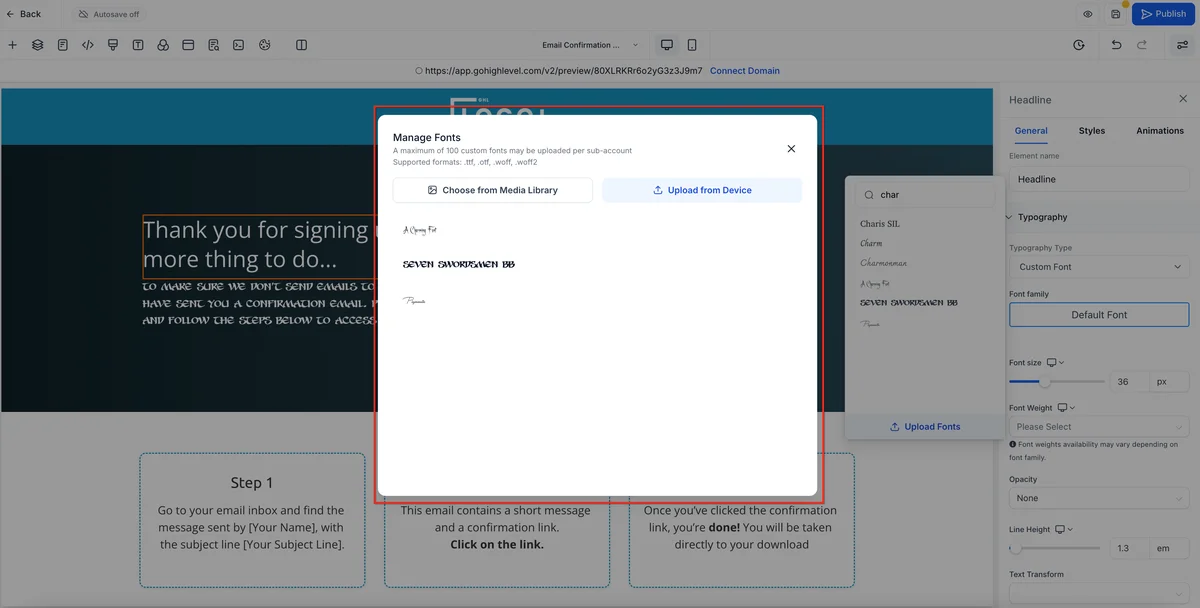
Every page built in GHL's website builder and funnel builder has a dedicated SEO settings panel. Access it by clicking on any page and opening the Settings or SEO tab.
For each page, you can set:
- Meta title: The clickable headline that appears in Google search results. Aim for 50–60 characters with your primary keyword and brand name.
- Meta description: The summary that appears below the title in search results. Aim for 150–160 characters with a clear value proposition and keyword.
- Page URL slug: The URL path for the page. GHL auto-generates a slug from the page title, but you should edit it to be clean, keyword-rich, and short.
These three fields - meta title, meta description, and URL slug - are the core of on-page SEO for any web page. GHL makes them editable for every page you build.
Image Alt Text
Images uploaded to GHL's website and funnel builder can have alt text added in the image settings panel. Alt text serves two purposes: accessibility (screen readers use it) and SEO (search engines read it to understand image content).
Add descriptive, keyword-relevant alt text to every significant image on your pages. A solar company's hero image alt text might be: "GoHighLevel dashboard for solar lead management" - specific and relevant.
Custom Domains
GHL websites and funnels can be published on your own custom domain, which is foundational for SEO. A page at yourdomain.com/services builds authority on your domain. A page on a generic GHL subdomain does not.
Always configure a custom domain for any GHL website or funnel that targets organic search traffic.
Canonical URLs
GHL automatically sets canonical tags on its pages - these tell search engines which version of a URL is the "official" one, preventing duplicate content issues if a page is accessible via multiple URLs.
Robots and Indexing Settings
GHL pages default to being indexable by search engines. You can toggle no-index for pages you do not want Google to crawl - thank-you pages, order confirmation pages, and member-only content are typical no-index candidates. This prevents low-value pages from diluting your site's crawl budget.
Blog SEO in GoHighLevel
GHL's Built-In Blog
GoHighLevel includes a blog builder for websites created on its platform. Each blog post has dedicated SEO settings:
- Meta title (separate from the post's display title, if desired)
- Meta description
- Custom URL slug
- Author name and date (relevant for Google's E-E-A-T signals)
- Featured image with alt text
Well-configured blog posts built on GHL's platform can rank organically just like any CMS blog. The SEO fundamentals are the same: target a specific search query, write comprehensive content that addresses the query better than existing results, and build topical authority across related posts.
Schema Markup
GHL's blog pages support basic schema markup for articles, including publication date and author. For local businesses, adding Local Business schema helps Google understand your business type, location, and contact information. GHL's forms and embedded widgets can include structured data with proper configuration.
For more advanced schema types (FAQ schema, HowTo schema, Review schema), these typically require custom code injection in GHL's page settings - which is available on all plans.
Local SEO: GoHighLevel's Strongest SEO Feature
For local service businesses - plumbers, dentists, solar companies, chiropractors, restaurants - local SEO is the primary traffic channel. And local SEO is significantly influenced by Google Business Profile signals, including the quantity and recency of Google reviews.
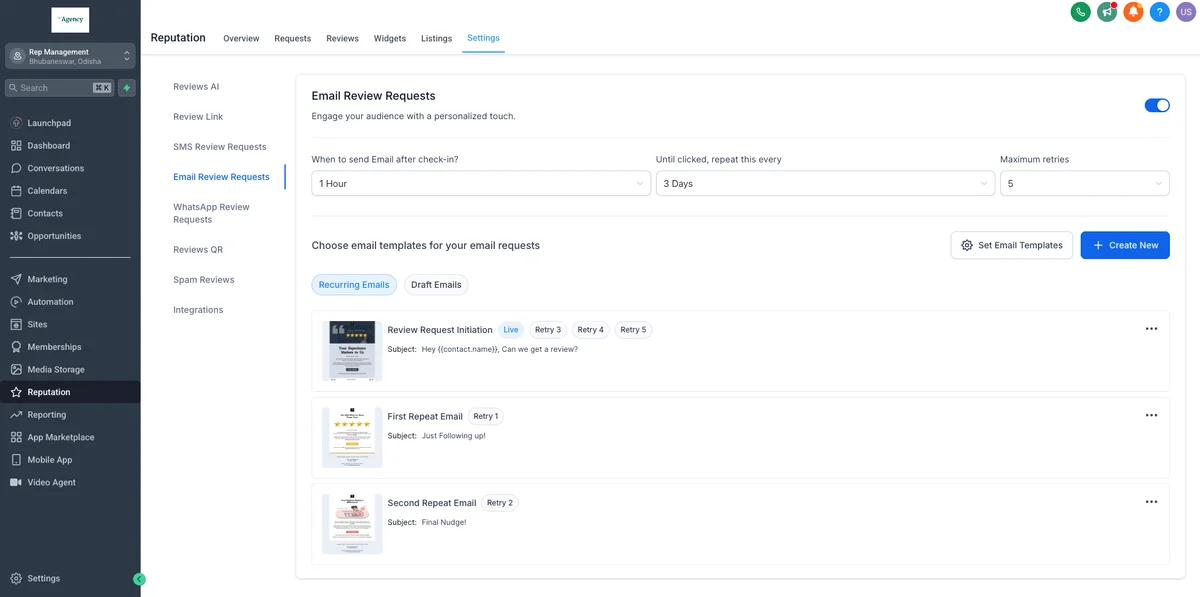
This is where GoHighLevel's reputation management feature becomes a genuine SEO tool.
How Review Automation Impacts Local SEO
Google's local ranking algorithm considers three main factors: relevance, distance, and prominence. Prominence - how well-known and trusted a business is - is heavily weighted toward review signals:
- Total review count: More reviews generally equal better ranking
- Average star rating: Higher ratings improve both ranking and click-through rate
- Review recency: Google favors businesses with recent reviews over those with a cluster of old reviews
- Review response rate: Responding to reviews (positive and negative) is a positive signal
GoHighLevel's review automation addresses all four by systematically requesting reviews from customers at the optimal moment (post-service) and making it frictionless with a direct review link via SMS.
A restaurant, solar company, or healthcare practice that implements GHL's review automation typically adds 10–30 new Google reviews per month. Over 6–12 months, this creates a review profile that substantially outranks competitors who collect reviews passively.
Setting Up Review Automation for Local SEO
Start your free 30-day trial through our partner link →
What GoHighLevel's SEO Tools Do NOT Include
It is important to understand what GHL does not do for SEO:
No Keyword Research
GoHighLevel does not help you discover which search queries your potential customers are using. For keyword research, you need:
- Google Keyword Planner (free with Google Ads account)
- Ahrefs or SEMrush (paid, industry-standard tools)
- Ubersuggest (budget option)
- Google Search Console (free, shows queries driving current traffic)
Keyword research determines what content to create and what pages to optimize. Without it, you are guessing what your audience searches for.
No Backlink Analysis or Building
GoHighLevel has no tools for analyzing who links to your site, finding link building opportunities, or monitoring your domain authority. Backlinks remain a critical ranking factor.
For backlink work:
- Ahrefs or Moz for backlink analysis and competitor research
- HARO (Help a Reporter Out) for earning editorial backlinks
- Local directory citation building for local SEO (Bright Local handles this)
No Technical SEO Audit
GHL does not scan your site for technical issues: broken links, slow page load times, duplicate content, crawl errors, mobile usability issues, or Core Web Vitals problems. For technical audits:
- Google Search Console (free - shows crawl errors, indexing status, Core Web Vitals)
- Screaming Frog (detailed technical crawler)
- Ahrefs Site Audit or SEMrush Site Audit (comprehensive technical analysis)
No Rank Tracking
GoHighLevel does not track your keyword positions in search results over time. For rank tracking:
- Google Search Console (free - shows average position for queries you rank for)
- Ahrefs Rank Tracker or SEMrush Position Tracking (keyword-level daily rank tracking)
No Competitor SEO Analysis
GHL provides no visibility into your competitors' SEO strategy, their ranking keywords, their backlink profiles, or their content performance. Competitor analysis is fundamental to SEO strategy and requires external tools.
The Complete SEO Stack for GoHighLevel Users
For GHL users who want to build organic search as a traffic channel, the recommended stack is:
GHL handles: on-page SEO settings for GHL pages, review collection (local SEO), blog content publishing
Google Search Console (free): technical health monitoring, indexing status, current ranking queries, Core Web Vitals
Ahrefs or SEMrush ($99–$249/month): keyword research, content planning, backlink analysis, competitor research, rank tracking
Bright Local or Whitespark (~$29–$79/month): local citation building and monitoring (important for local businesses)
This stack covers the full SEO workflow from content strategy to technical monitoring to local authority building - with GHL handling the content publishing and review automation at the center.
Using GHL Blog for SEO Content
If you host your website on GoHighLevel's platform, the built-in blog is a viable content publishing tool for SEO. The technical SEO fundamentals are in place: custom slugs, meta tags, alt text, indexable pages on your domain.
Best practices for GHL blog SEO:
- Target one primary keyword per post - do not try to rank for multiple competitive queries with one article
- Match search intent - understand whether searchers want information (how-to), comparison (vs), or to purchase (pricing) and write accordingly
- Use descriptive H2 and H3 headings that include keyword variations naturally
- Internal link to related posts - GHL's blog supports internal links and you should use them to build topical clusters
- Update posts annually - GHL's blog allows post editing with updated dates; refreshing content signals freshness to Google
- Target long-tail keywords first - a new site ranking for "best CRM for solar companies" is more achievable than "CRM software"
👍 GoHighLevel Pros
- ✓On-page SEO controls for every page and blog post built on GHL
- ✓Review automation is one of the most effective local SEO tools available
- ✓Custom domain support for full SEO authority on your own domain
- ✓Blog builder with meta tags, custom slugs, and proper indexing settings
- ✓No-index toggles for pages you don't want crawled (thank-you pages, member areas)
👎 Cons
- ✗No keyword research, rank tracking, or competitor analysis tools
- ✗No backlink analysis or technical SEO audit capabilities
- ✗SEO reporting limited to what's built into GHL's analytics - no Google Search Console integration
- ✗Advanced schema markup requires custom code injection
- ✗Blog builder less feature-rich than WordPress for large-scale SEO content operations
Related Resources
- Read our guide on landing page builder
- Read our guide on funnel builder
- Read our guide on GoHighLevel features
- Visit the GoHighLevel official site
- Visit the Google Search Central documentation
Frequently Asked Questions
Does GoHighLevel help with SEO?
Can GoHighLevel websites rank on Google?
Is GoHighLevel good for local SEO?
Does GoHighLevel have a sitemap?
Can I add schema markup to GoHighLevel pages?
What SEO tools should I use alongside GoHighLevel?
Does GoHighLevel track keyword rankings?
EXTENDED FREE TRIAL
Start with 30 days free, not 14.
Use our partner link to get double the standard 14-day trial.
Start Your Free 30-Day Trial →Ashley Kemp is a digital entrepreneur and perpetual traveller. Switched from ClickFunnels to GoHighLevel years ago and never looked back. Writing about what actually works.
Was this article helpful?